
Table of Contents
- Key Highlights:
- Introduction
- Understanding Marketing Automation
- Key Components of Marketing Automation
- Real-World Applications of Marketing Automation
- Related Concepts in Marketing Automation
- Visualizing Marketing Automation
- Why Marketing Automation Matters
- FAQ
Key Highlights:
- Definition and Scope: Marketing automation refers to the use of software to automate and optimize marketing processes, facilitating personalized customer engagement across various channels.
- Core Components: Key elements include data collection, automated workflows, content delivery, analytics, and compliance management, all enhanced through AI capabilities.
- Real-World Applications: Effective use cases such as welcome email series, abandoned cart reminders, and re-engagement campaigns illustrate the practical benefits of marketing automation in driving customer interactions.
Introduction
In the dynamic world of digital marketing, where consumer preferences evolve rapidly and competition intensifies, businesses are increasingly turning to marketing automation as a strategic solution. This technological advancement allows companies to streamline repetitive marketing tasks, enabling them to focus on more impactful initiatives. By integrating data-driven insights and automation, they can deliver personalized experiences to customers at scale. This article delves into the intricacies of marketing automation, exploring its definition, key components, real-world applications, and the implications for businesses navigating the complexities of modern marketing.
Understanding Marketing Automation
At its essence, marketing automation encompasses the use of software platforms to manage and optimize marketing tasks across multiple channels. This technology allows businesses to automate processes such as email marketing, audience segmentation, and customer interaction tracking. By leveraging data and predefined rules, organizations can ensure that their messaging reaches the right audience at the right time, thus enhancing the overall customer journey.
The evolution of marketing automation has been significantly shaped by advancements in artificial intelligence (AI). Modern platforms now incorporate AI-driven features such as predictive analytics, sentiment analysis, and automated content optimization, enabling marketers to go beyond basic automation. This shift empowers them to deliver highly personalized, real-time experiences that resonate with their target audience.
Key Components of Marketing Automation
To effectively implement marketing automation, businesses must understand its core components. Each element plays a vital role in creating a cohesive and efficient marketing strategy:
Data Collection & Management
Central to any marketing automation platform is the ability to collect and manage customer data from various touchpoints. This centralized database enables marketers to segment their audience effectively and target specific groups based on behavior, preferences, and demographics.
Rules & Triggers
Automated workflows are defined by rules and triggers that initiate actions based on customer interactions. For example, a new sign-up can trigger a welcome email series, while a cart abandonment may prompt a reminder email to encourage completion of the purchase.
Content Automation
Content automation ensures that the right messages are delivered to customers at the right time. By analyzing user behavior, marketers can send personalized emails, promotions, and offers that align with individual customer journeys.
Analytics & Reporting
Robust analytics and reporting tools are essential for tracking the performance of marketing campaigns. These insights allow businesses to understand customer engagement levels, measure ROI, and make data-driven adjustments to optimize future efforts.
Integration
A successful marketing automation strategy requires integration with various systems, including Customer Relationship Management (CRM) software, e-commerce platforms, and analytics tools. This interconnected approach creates a unified marketing ecosystem that enhances efficiency and effectiveness.
Compliance Management
With data privacy regulations such as GDPR becoming increasingly stringent, compliance management is a critical aspect of marketing automation. Ensuring adherence to these regulations involves implementing consent management practices and data deletion protocols to protect consumer information.
AI-Driven Enhancements
The incorporation of AI technologies into marketing automation platforms has revolutionized the industry. Machine learning algorithms can be utilized for predictive segmentation, content recommendations, and real-time personalization, allowing marketers to create targeted campaigns that yield higher engagement rates.
Real-World Applications of Marketing Automation
The practical applications of marketing automation are vast and diverse, with businesses across various sectors leveraging this technology to enhance customer engagement and drive sales. Here are some notable examples:
Welcome Email Series
Implementing an automated welcome email series is a powerful strategy for onboarding new subscribers. This series not only introduces new customers to the brand but also guides them through initial engagement, setting the stage for future interactions.
Abandoned Cart Reminders
E-commerce businesses often face the challenge of cart abandonment, where potential customers leave items in their shopping carts without completing their purchase. Marketing automation addresses this issue by sending personalized reminders to encourage customers to finalize their transactions.
Lead Nurturing
Lead nurturing is a crucial process that involves delivering targeted content to prospects based on their position in the customer journey. Automated workflows can be designed to provide relevant information and offers that guide leads toward conversion.
Birthday & VIP Offers
Recognizing customer milestones, such as birthdays or significant anniversaries, can strengthen brand loyalty. Automated systems can trigger special promotions or exclusive offers that celebrate these occasions, fostering a deeper connection with customers.
Re-engagement Campaigns
Over time, some customers may become inactive or disengaged. Marketing automation can identify these individuals and initiate re-engagement campaigns, sending tailored messages designed to rekindle their interest and encourage them to return.
AI-Powered Content Optimization
Advanced platforms like Geneo leverage AI to analyze brand sentiment and optimize content for AI-driven search engines. This capability supports marketing automation workflows by providing real-time data and insights that inform campaign adjustments, ensuring that messaging remains relevant and effective.
Related Concepts in Marketing Automation
To fully grasp the implications of marketing automation, it is essential to understand its relationship with several related concepts:
Customer Relationship Management (CRM)
CRM systems are designed to manage customer interactions and data, often integrating seamlessly with marketing automation platforms. This synergy enhances the ability to track customer engagement and tailor marketing efforts accordingly.
Lead Nurturing
Lead nurturing encompasses automated processes that guide prospects through the sales funnel. By delivering valuable content and touchpoints, businesses can cultivate relationships with leads, ultimately driving conversions.
Workflow Automation
While marketing automation focuses specifically on marketing tasks, workflow automation encompasses a broader range of business processes. This holistic approach can lead to increased efficiency across various departments within an organization.
Omnichannel Marketing
Effective marketing strategies today require a coordinated approach across multiple channels, including email, social media, web, and SMS. Marketing automation facilitates this omnichannel engagement by ensuring consistent messaging and interactions.
Email Marketing
Email marketing remains a foundational use case for automation. With the integration of AI and personalization, marketers can deliver highly relevant content that resonates with their audience, enhancing engagement and conversion rates.
Visualizing Marketing Automation
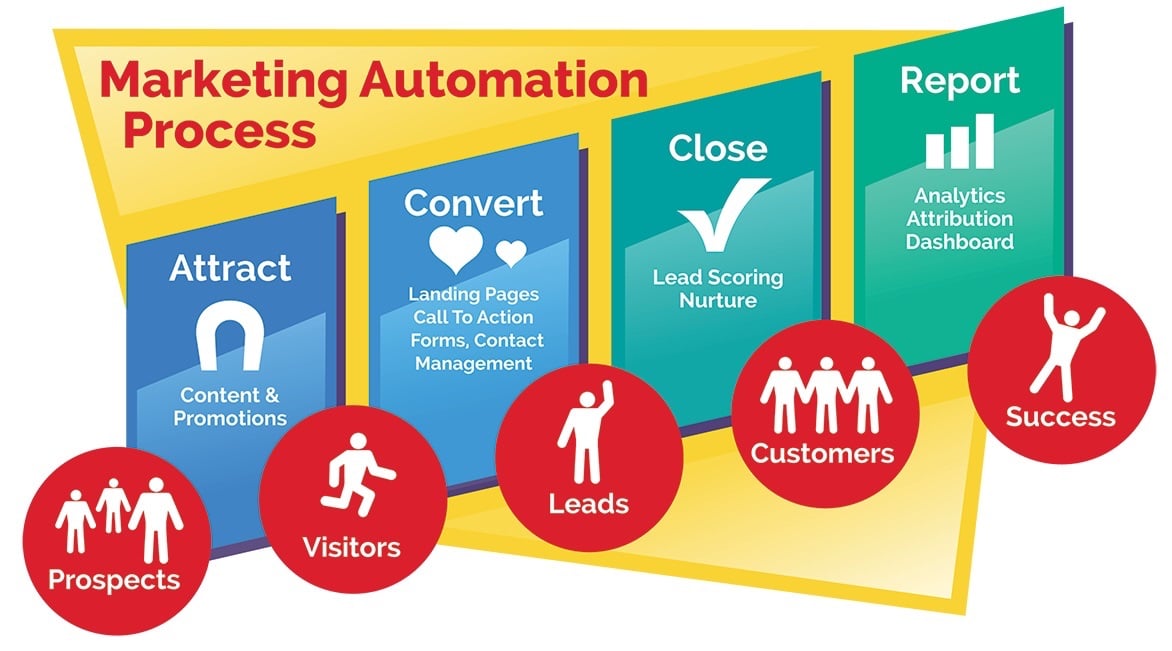
To understand how marketing automation workflows function, it can be helpful to visualize the process. A typical marketing automation workflow follows these steps:
- Trigger: A customer action, such as signing up for a newsletter or making a purchase, initiates the workflow.
- Condition: The system checks specific conditions, such as whether the customer is new or returning.
- Action: Based on the conditions met, an automated response is generated, such as sending a welcome email or a personalized offer.
- Branching: Different paths may be taken based on customer behavior, allowing for tailored responses that cater to individual preferences.
- Feedback Loop: Analytics gathered from customer interactions inform future optimizations, creating a continuous cycle of improvement.
Why Marketing Automation Matters
The significance of marketing automation extends beyond mere efficiency. It empowers businesses to scale personalized marketing initiatives, ultimately driving higher ROI. In an era where consumer expectations are increasingly shaped by real-time interactions and tailored experiences, the integration of AI and data-driven insights becomes paramount.
As companies navigate the complexities of modern marketing, the ability to balance automation with compliance and human-centric engagement is crucial. By leveraging marketing automation, organizations can not only streamline their processes but also create meaningful connections with their customers, fostering long-term loyalty and engagement.
FAQ
What is marketing automation?
Marketing automation refers to the use of software platforms to automate and optimize marketing tasks, enabling personalized and data-driven customer engagement across multiple channels.
How does marketing automation improve efficiency?
By automating repetitive tasks such as email marketing and audience segmentation, marketing automation allows teams to focus on higher-level strategic initiatives, thus improving overall efficiency.
What are some examples of marketing automation in action?
Real-world applications include welcome email series, abandoned cart reminders, lead nurturing, and re-engagement campaigns, all of which enhance customer interactions and drive conversions.
How does AI enhance marketing automation?
AI technologies enable advanced features like predictive analytics, sentiment analysis, and real-time personalization, allowing marketers to deliver customized experiences at scale.
Why is compliance management important in marketing automation?
With stringent data privacy regulations in place, compliance management is essential to ensure that marketing practices adhere to legal requirements, safeguarding consumer data and building trust.


